As manufacturers look to increase efficiency, reduce labor strain, and maintain consistent output, advanced robotic arms have become a critical part of modern industrial operations. From palletizing and packing to machine tending and material handling, robotic automation is no longer reserved for massive facilities—it’s now a practical solution for manufacturers of all sizes.
The question many operations face isn’t whether to automate, but where to buy advanced robotic arms for industrial use and how to ensure the solution fits real production requirements.
What Makes a Robotic Arm “Advanced” for Industrial Use?
Industrial robotic arms are designed for repeatability, accuracy, and long-term operation in demanding environments. Advanced systems typically offer:
- High payload capacity and reach
- Precise, repeatable motion for consistent results
- Flexible programming for multiple applications
- Integration with conveyors, case packers, and labeling systems
- Safety features that meet modern compliance standards
These capabilities make robotic arms suitable for tasks like palletizing finished goods, packing cases, or handling products at the end of a production line.
Why Buying Direct Isn’t Always the Best Option
Many manufacturers begin their search by looking directly at robot manufacturers. While this can help identify available models, purchasing a robotic arm on its own often leaves critical gaps in planning and execution.
A robotic arm is only one component of a functional automation system. Without application expertise, manufacturers risk investing in equipment that:
- Is improperly sized for the task
- Doesn’t integrate smoothly with existing packaging lines
- Requires excessive manual intervention
- Creates new bottlenecks instead of eliminating them
This is why many companies choose to work with a packaging automation company
that understands real production environments, rather than purchasing robotic arms directly from a manufacturer.
Common Industrial Applications for Robotic Arms
Advanced robotic arms are used across a wide range of industrial and packaging applications.
Palletizing and Depalletizing
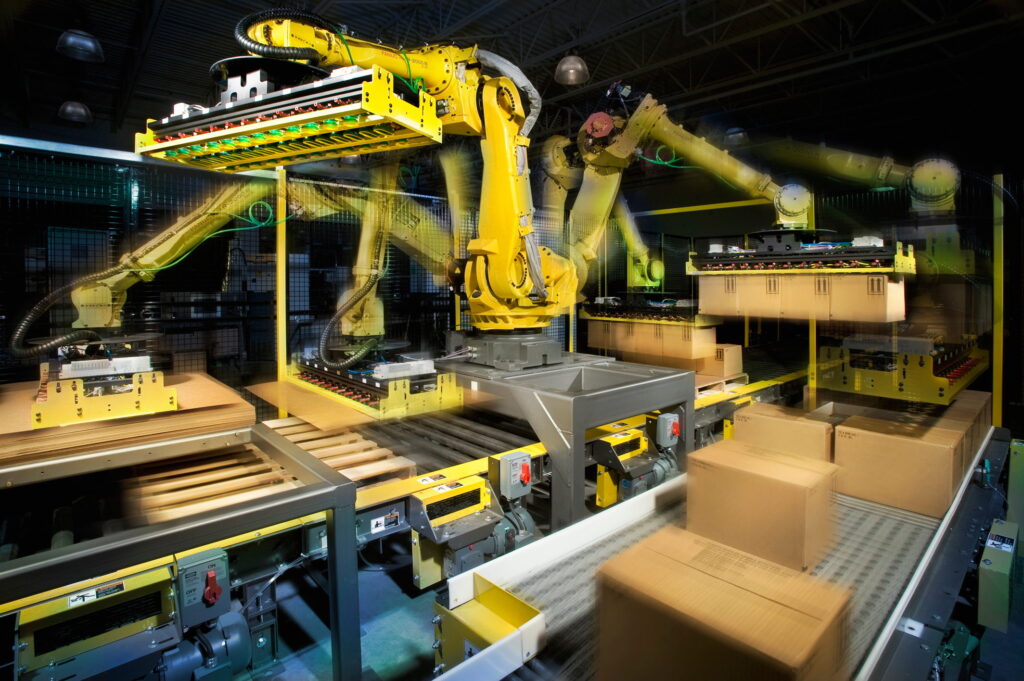
Robotic palletizing is one of the most common uses of industrial robotic arms. These systems stack cases consistently, reduce manual labor, and maintain stable pallet loads across varying product formats.
Packing and Case Handling
Robotic arms can pick, orient, and place products into cases or cartons with precision. This makes them well suited for high-mix production environments where flexibility is essential.
End-of-Line Automation
At the end of the production line, robotic arms often operate alongside labeling, case sealing, and stretch wrapping systems to create a fully automated workflow.
Robotic Palletizing Solutions Built for Industrial Environments
When deciding where to buy advanced robotic arms, manufacturers should also consider which type of APT Manufacturing system best fits their operation.
- Traditional vs Collaborative Robotic Arms
- Collaborative Robotic Arms
Planning for Long-Term Automation Success
Investing in advanced robotic arms is a long-term decision. Manufacturers that plan for future product changes, SKU expansion, and throughput increases see the greatest return on automation investments.
Working with an experienced automation partner ensures robotic arms are selected and deployed with flexibility in mind—allowing operations to scale efficiently without constant system redesigns.
If you’re evaluating where to buy advanced robotic arms for industrial use, focus on suppliers that deliver more than equipment alone. The right partner helps bridge the gap between robotic capability and real-world production demands—ensuring automation performs reliably today and adapts as operations evolve.